
Centre Stage: Khun Kob Songsit on Life, Art, and Musical Magic
Exclusive and off-the-cuff interview with Khun Kob Songsit, star of Fah Jarod Sai: The Musical
By Aina Sarita Swartz
คุณกบ ทรงสิทธิ์ กับชีวิต ศิลปะ และมนต์เสน่ห์ของละครเพลง
บทสัมภาษณ์สุดพิเศษกับคุณกบ ทรงสิทธิ์ ดาราจาก “ฟ้าจรดทราย เดอะมิวสิคัล”
โดย ไอน่า สริตา สวอร์ทล์
การแสดง
Centre Stage: Khun Kob Songsit on Life, Art, and Musical Magic
"With theatre, it is a fresh experience each time you perform — it’s never the same each night."
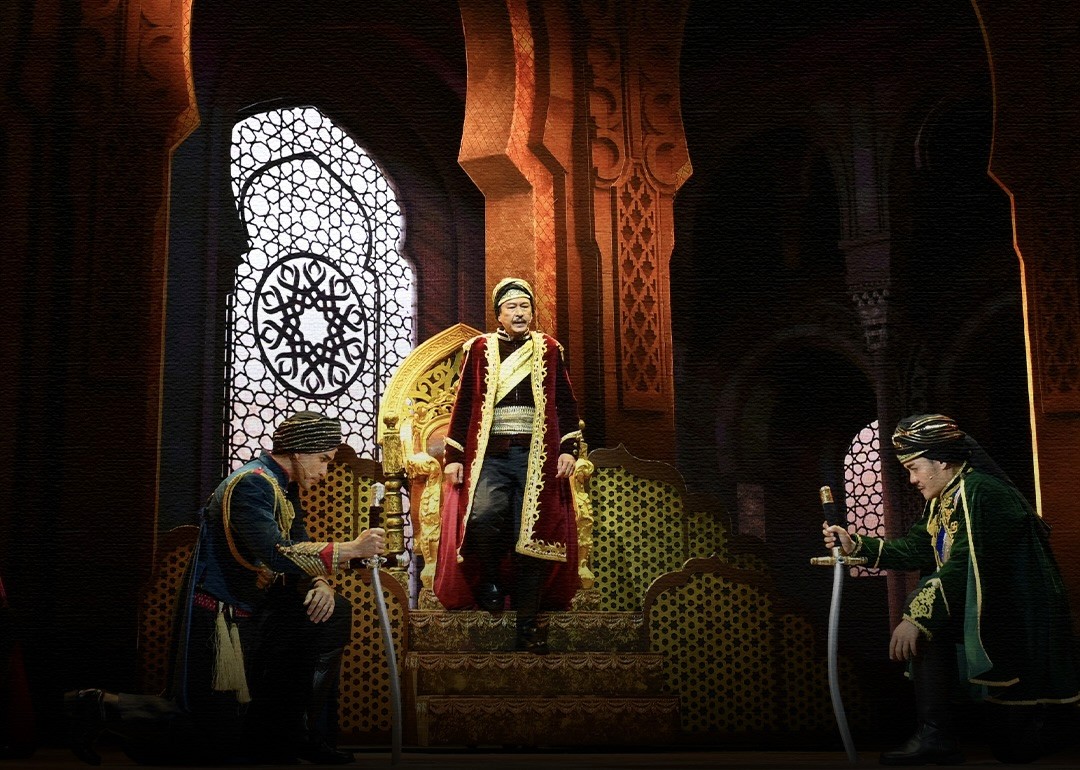
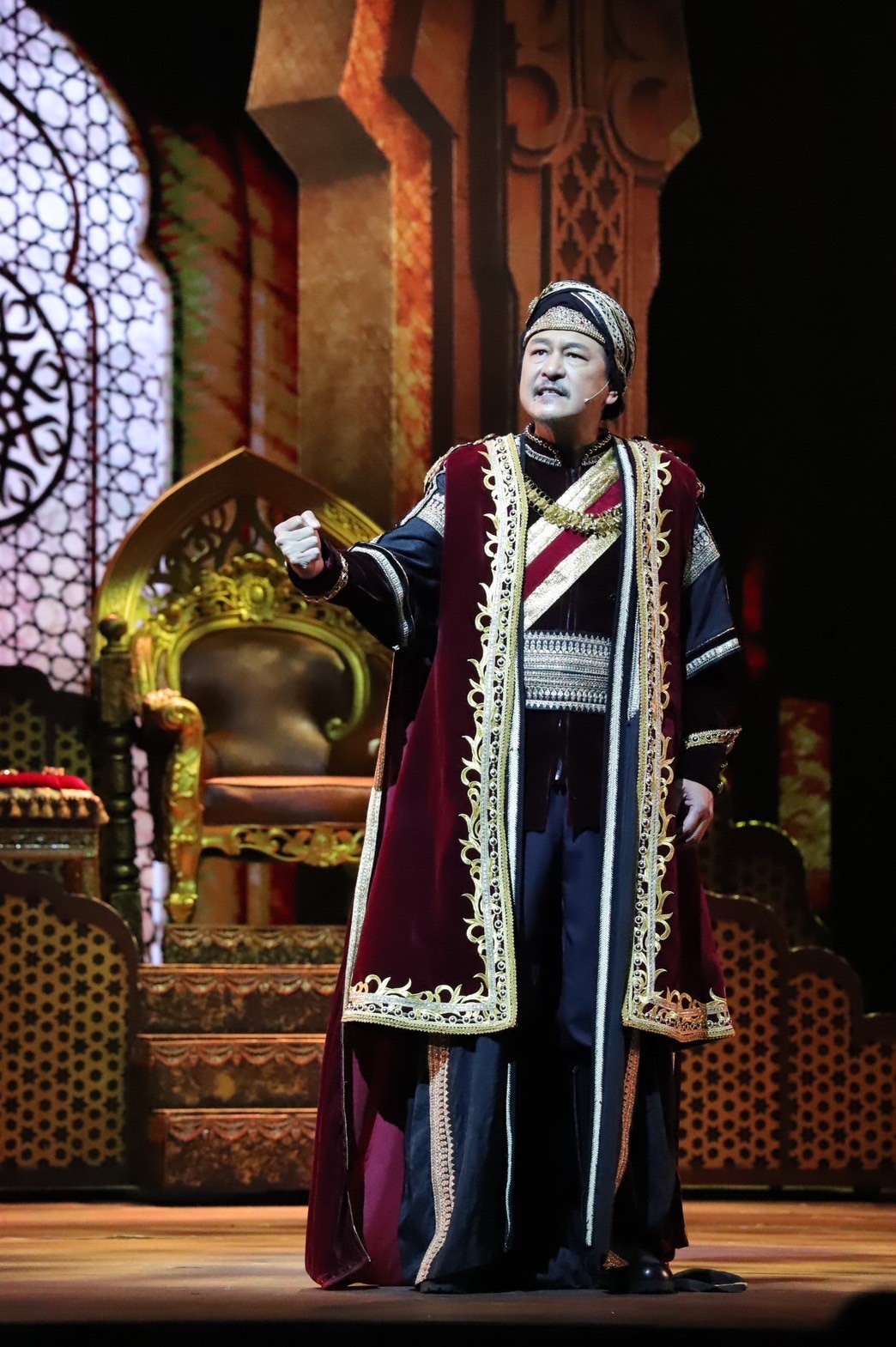
Khun ‘Kob’ Songsit Roongnophakunsri (กบ ทรงสิทธิ์ รุ่งนพคุณศรี), a living legend of Thai pop music and TV, sits down to talk about his life, his inspiration, and his current production, Fah Jarod Sai: The Musical, now playing at Muangthai Rachadalai Theatre.
A household name in Thailand, Khun Kob began his career in the late 1980s, signing first with Sound Scale and then GMM Grammy, releasing numerous hits in the 1990s and beyond. Known for heartfelt and catchy love songs such as “ปาฏิหาริย์” (“Miracle”) and “ขีดเส้นใต้” ("Underline"), he quickly garnered recognition for his smooth voice and his poppy yet sentimental ballads. Khun Kob also gained widespread fame in his acting career through his role in the popular sitcom 3 Num 3 Mum (Brotherhood x3), which ran from 1991 to 1998.
Currently performing as King Ahmed in the hit Thai stage production Fah Jarod Sai: The Musical, Khun Kob’s days are filled with rehearsals and shows — despite this, he kindly took the time to sit down with BAC to discuss his craft, his take on the present state of Thai theatre, and the bigger themes and implications of his current show.
What is the biggest difference between acting for the stage and for the screen?
Khun Kob: Each medium has its own acting style. For film, the screen is very big. The slightest movement or the smallest expression will be visible to the audience. The faintest glimmer of a tear in your eye, for example. So, acting for film needs to be as natural -- as close to natural -- as you can make it.
For TV, it’s another step up. At-home TVs vary in size, of course, but TV screens are generally smaller than movie-theatre screens. As such, you have to play it a little bit north of reality -- you have to act a bit larger than life -- because the screen is a bit smaller.
Now, for the stage -- the person in the farthest row from the stage, all the way at the back of the house, they have to see you and understand your emotions. So, you have to play it bigger, about 200-300%, so that the person in the back row can see and empathise with what you’re feeling.
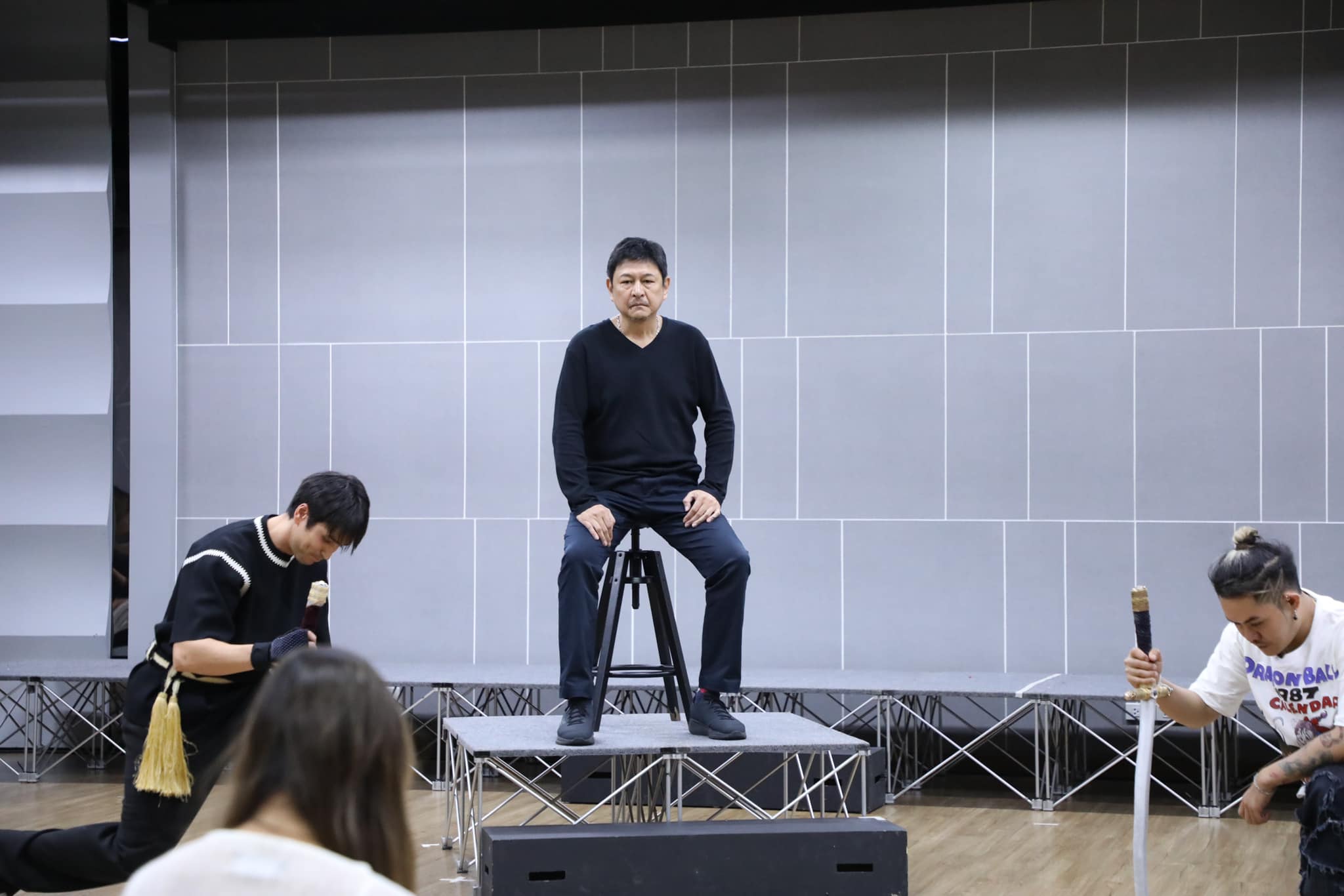
These are the differences in terms of acting styles, but there are differences in methodology, too. Like now -- we two are sitting here talking. For a movie shot, first, we would have to shoot a take of you doing your lines. Then, one of me. Then, a medium shot from a little further back of you, and another of me. Then a wide shot from over on my side -- that’s at least six takes. It is a lot of repetition. That’s what makes acting for a big screen so hard, and slower to produce, too. The lighting has to be adjusted for each take, and you have to pay close attention to continuity in terms of your acting. You might not shoot the scenes in order, either -- you might film the ending first, depending on location and scheduling. This is true for television as well.
What about theatre? Well, when you’re on stage, it’s like counting from one to ten and then it’s over. In TV and film, you can add a sepia filter or a timecard saying “three weeks earlier” -- most of the time onstage, you play out the story from beginning to end without any breaks. It’s not necessarily more exciting, but there is more flow.
What do you enjoy most about performing onstage?
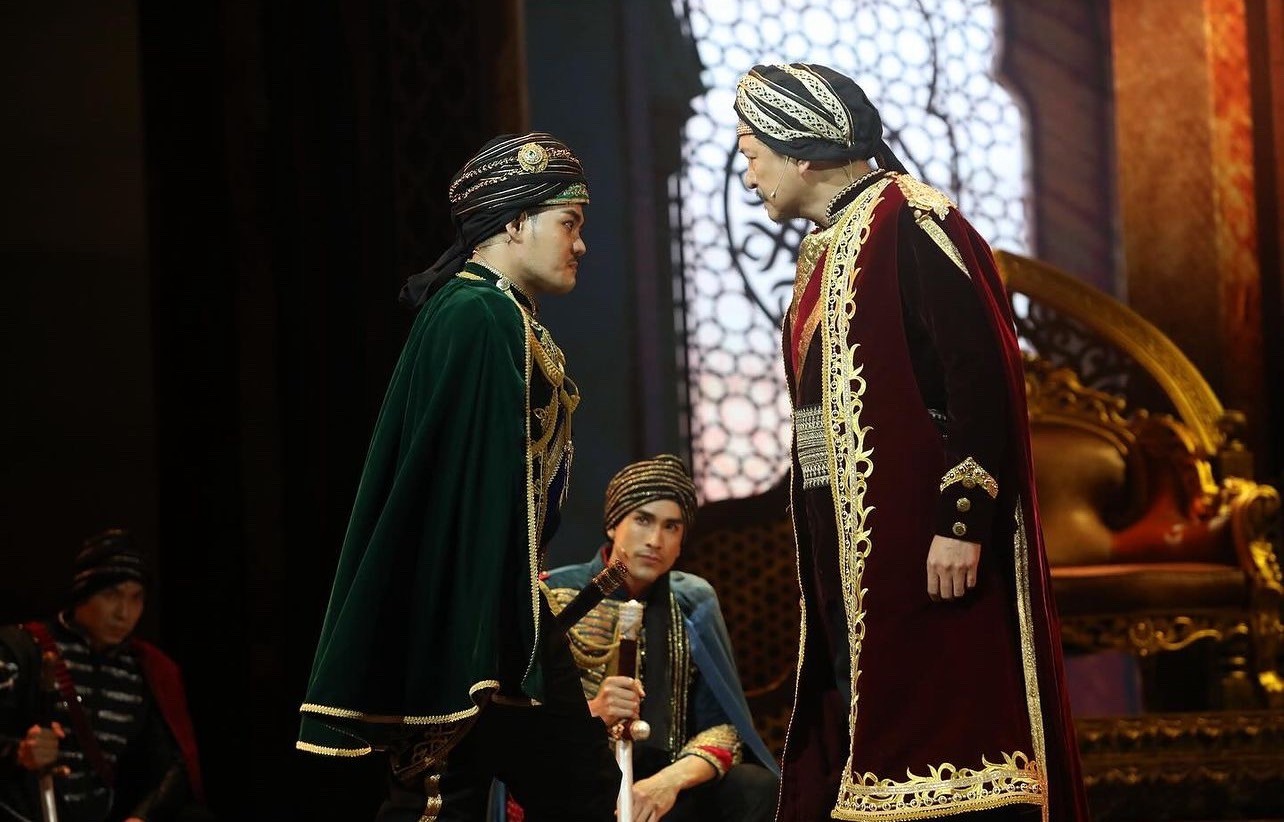
Khun Kob: Well, in addition to the continuous flow I talked about before, with theatre it is a fresh experience each time you perform — it’s never the same each night. You also get immediate reactions from the audience, which can make it fun. During a funny scene, you get to hear the laughter right away. During a sad scene, there is complete and utter silence. In this show, for example, when Nadech (Kugimiya) takes his shirt off and you see his six-pack — screams all around. Things like that can make it fun, that immediacy.
Who in your life has been an inspiration to your acting career?
Khun Kob: Oh, so many people! Really, there are so, so many. My first acting teacher, Khun Mom Noi, gave me the opportunity to learn real acting techniques, like the kind you would learn in university. He studied at Chulalongkorn University, so he took all the things his teacher taught him and taught them to me. So I got a good grounding. I’ve collaborated with him since the very beginning of my career. There were some very difficult obstacles to overcome in the beginning, but it makes the hardships of today more tolerable by comparison.
"But for our own prejudices -- they exist within us, and so it is our responsibility to overcome them."
This show is about two people overcoming their differences — whether that be in terms of culture, faith, or mindset — to come together as one. How do you think we as a society can better overcome these differences in the real world?
Khun Kob: The story that this play is based on actually originated before the First World War. Back then, there was discrimination everywhere -- discrimination based on race or nationality. Nowadays, things have changed -- racial discrimination isn’t so much of a problem. Instead, discrimination nowadays usually happens based on other factors. For example, I might hate you because you’ve stolen my job. Or, as with some restaurants, you’ll see that they put up signs saying “will not serve tourists” -- because they probably do good business already, and they might not be able to converse in English. Things like that, as opposed to race or nationality.
In terms of the bigger picture, that’s up to the nation’s leaders, not so much to me. They have the power to change things in that sense. But for our own prejudices — they exist within us, and so it is our responsibility to overcome them. If someone bears you no ill will and is not harming you, then you shouldn’t bear any ill will towards them. It’s that simple.

"For a musical, it has to have nice-sounding songs, be easy to understand, exciting enough to hold the audience’s attention, and paced relatively quickly in a way that feels complete. These are the elements of all good stories."
What is the recipe for a successful Thai musical?
Khun Kob: There isn’t one! There’s no such thing as a recipe for art, any kind of art. We can kind of take a guess at what is likely to work, but no one really knows what makes a hit a hit. Sometimes, it depends on the society — people might not be interested in songs right now, with everything else going on in the world. There are other factors too, of course.
That said, everything has a little bit of a formula. For a musical, it has to have nice-sounding songs, be easy to understand, exciting enough to hold the audience’s attention, and paced relatively quickly in a way that feels complete. These are the elements of all good stories. But in terms of what makes a production popular? Sometimes, it’s the actor. Like for this show, I’m sure having Nadech in it contributes to its popularity. But what else? No one really knows.
Thai stage productions almost never run for more than 70 performances in one run. Usually, the most there is for a show is 50 performances, and then maybe they restage it a year later. Four Reigns: The Musical (สี่แผ่นดิน เดอะมิวสิคัล) had 101 performances, but that is very, very rare.
By the end of this run, Fah Jarod Sai: The Musical will have staged 82 performances.
In terms of how to make a musical this popular -- well, as I mentioned, sometimes it’s the actors, like Nadech. But are there other Nadechs out there? I don’t know. There may be, in the future. But today that is hard to find.
If you could listen to one song for the rest of your life, which song would it be?
Khun Kob: I really can’t say! There are so many. As a singer and a musician, I listen to a lot of music from a lot of different genres. And what I like to listen to really depends on my mood, so I can’t say which one song I would listen to for the rest of my life. Like now, doing a musical -- a lot of musical theatre songs have an orchestral backing, so as soon as I get into my car, I turn on rock or jazz music to clean out my ears. It depends on your mood -- I mean, who wants to listen to “Jingle Bells” when they’re sad?

And finally, what is your favourite moment in this current show?
Khun Kob: Ah, I can’t answer that — you’ll have to come see it for yourself!
Truly an icon of Thai music, Khun Kob has been performing for over 30 years. He continues to practise his craft, taking to the stage to serenade his ever-loyal audience. Whether it be in the form of musicals, concerts, or TV appearances, Khun Kob has never stopped doing what he loves. Passion for his music and his art drives his career, allowing for his sustained success in the Thai entertainment industry and his consistent and devoted fanbase. His heartfelt performances continue to move audiences to both tears and laughter, making him a timeless figure of the world of Thai performing arts.
Be sure to catch Khun Kob in his current production, Fah Jarod Sai: The Musical, now playing with English subtitles at Muangthai Rachadalai Theatre until 15 December 2024.
To read more, visit: https://www.bangkokartcity.org/discover-detail/fah-jarod-sai-the-musical
MORE STORIES

From Royal Patronage to Shared Stewardship
Bangkok Art City
จากพระบรมราชูปถัมภ์ สู่การร่วมดูแลของสังคม
ทีม BAC
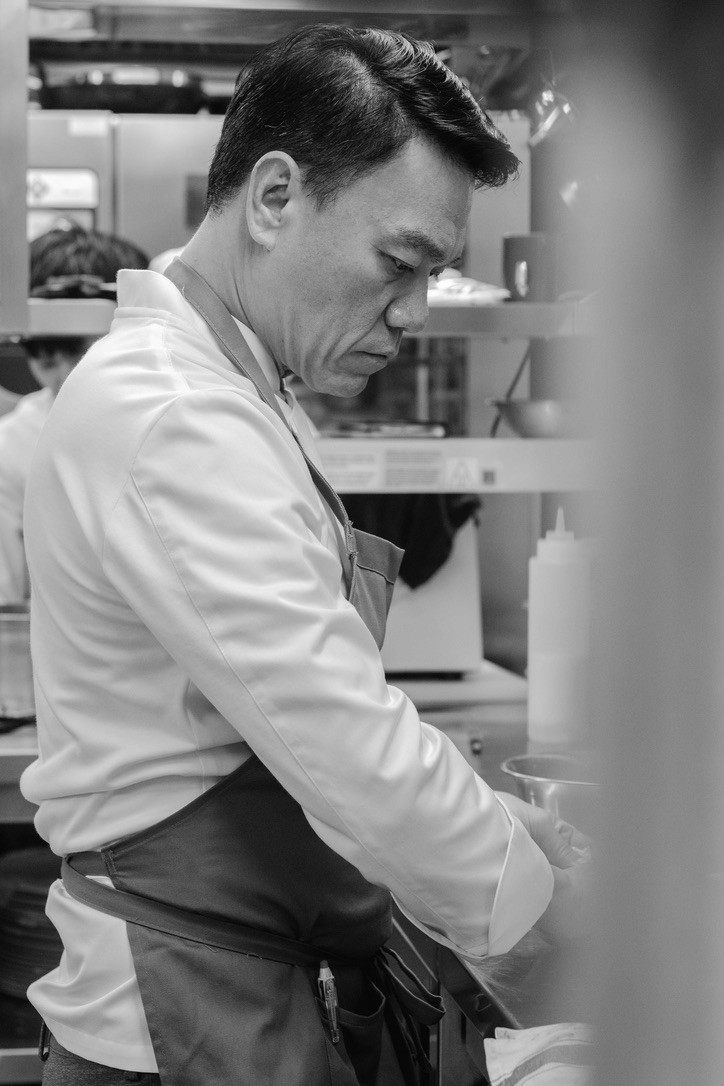
The Art of Thai Cuisine: Chef Ian Kittichai’s Culinary Canvas
By Aina Rita Swartz
ศิลปะแห่งอาหารไทย: ผืนผ้าใบแห่งการสร้างสรรค์ของเชฟเอียน กิตติชัย
โดย ไอน่า สริตา สวอร์ทส์
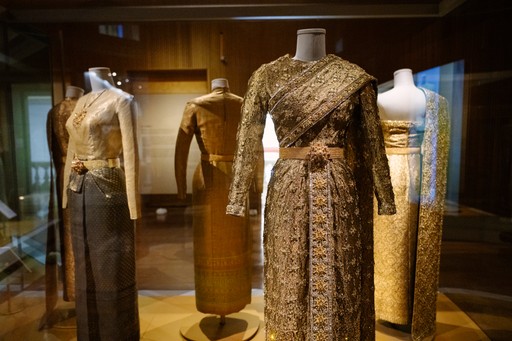
Decades of Style: Exploring Queen Sirikit’s Legacy of Fashion at the QSMT
By Aina Sarita Swartz
สิริราชพัสตราบรมราชินีนาถ: สำรวจมรดกแฟชั่นของสมเด็จพระบรมราชชนนีพันปีหลวง ณ พิพิธภัณฑ์ผ้าในสมเด็จพระนางเจ้าสิริกิติ์ พระบรมราชินีนาถ
โดย ไอน่า สาริตา สวาร์ตซ์
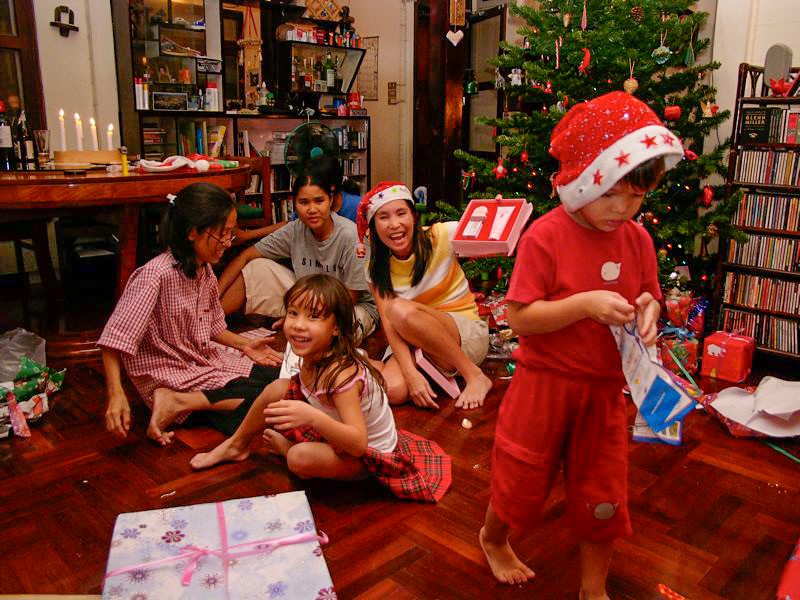
How to Have a Scandinavian Christmas
By Aina Sarita Swartz
วิธีฉลองคริสต์มาสแบบชาวสแกนดิเนเวีย
โดย ไอน่า สาริตา สวาร์ตซ์

Unlocking the Secrets Behind Taiwan's Film Success with the Creative Forces Behind Its Global Sensation
ถอดรหัสความสำเร็จหนังไต้หวันกับผู้ที่อยู่เบื้องหลังความสนุกป่วนโลก

Creating Innovative Textile Substitutes from the Use of ‘Soil’
Text by Dr. Khajornsak Nakpan
การสร้างสรรค์นวัตกรรมวัสดุสิ่งทอทดแทนจากการใช้ “ดิน”
โดย ดร. ขจรศักต์ นาคปาน

Bangkok with Elle
Elle
Bangkok with Elle
Elle

Photo Essay BAC x RPST
Words by RPST & BAC EDITORIAL
Photo Essay BAC x RPST
โดย RPST และ BAC EDITORIAL